A Vision for New Ground
Gardeners and farmers are visionaries. Before a field shines golden with wheat, before a vineyard diffuses its rich scent, someone must have a vision for new ground. Someone must be able to see not just what is— a weedy meadow, a tangled hillside— but what is possible.
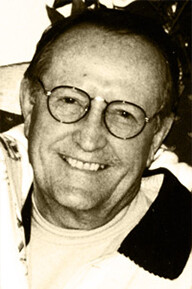
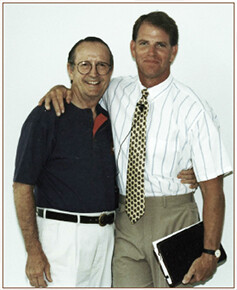
Tommy Nelson calls Mel Sumrall “a visionary, an idea man,” but the same can be said of Tommy. Each man’s vision, however, differs in type, as a wheat field differs from a vineyard. Tommy’s vision is for biblical truth made accessible and unforgettable, a teacher’s vision that sees, between a Bible’s bindings, the pageant of human history under God’s sovereign hand. Mel’s vision has always been that of a pioneer. Like Jesus, he sees the fields are “white already to harvest” (John 4:35) and the laborers few and his love for the lost blazes yet another trail for local or global distribution of biblical truth, starting with whoever he’s on the phone with at the moment.
Mel was never satisfied to be a typical clergyman and he never accepted a typical church full of “pew-sitters,” spiritual spectators. He believed, and still believes, in getting as many laborers as possible into those white fields. He dared to structure ministry in non-traditional ways, and encouraged his people to join in and do the same. In fact, he fostered a congregational climate that in part explains the unusually wide range of ministries that have grown up at DBC over the years.
To provide home classes for young couples, he introduced the Navigator 2:7 discipleship study he’d learned of at Glen Eyrie, the Navigator’s Colorado retreat center. When he and Patty started their second 2:7 group, Mel found a likely man in it that had been learning and growing and astounded him with the blunt declaration, “I’m not going to teach this group. You are.”
Tommy says of Mel, “He liked to forge ahead. He was Daniel Boone.” It was Mel who embarked DBC on the “Evangelism Explosion” program. He was one of the first trainers, accompanying nervous church members as they knocked on neighborhood doors to present the gospel. Mel exemplified lifestyle evangelism before the term was popular. Teresa Nelson fondly recalls, “Everything he asked anybody to do, he did it, too.” At an age when others make plans to sit on a porch and rock, Mel routinely rocked the house with new plans to equip the saints, as enthusiastic and energetic as any kid in the congregation.
In Tommy, Mel saw not merely a gifted speaker, but one with the spiritual gift of teaching. He put his young partner in the pulpit almost immediately. Soon they were alternating weeks, plowing in tandem through Romans and other seldom-turned scriptural soil, in spite of the fact that, at the time, Tommy was still in seminary, sometimes returning from class to teach what he had just studied.
Tommy praises, “Mel had not just the vision but the humility not to be intimidated by me, to let me do what I did best.” Mel comments wryly, “How many churches do you know of where the senior pastor, the old man, is not in the pulpit preaching?” But he had no doubts about giving Tommy pulpit room. “The purpose of spiritual gifts is to build up the body of Christ through those gifts,” he explains, “and I thought, if I don’t give him a chance to preach, how am I going to be faithful to scripture?”
Tommy and Teresa found in Mel and Patty a mentoring couple who worked as a team to share their faith. The Sumralls were also an extra set of grandparents for sons Benjamin and John Mark. One winter two-year-old Ben left tiny prints in a light snowfall in his quest for “Mr. Pat,” his name for Patty. Teresa, missing the toddler in the house, tracked him to the Sumrall kitchen and found him blissfully eating bananas with his friend.
Tommy saw Mel pouring his life impartially into others, regardless of age or status. “Mel would never play favorites,” Tommy emphasizes. “If you were a high school kid, he’d get with you. If you were an old man, he’d get with you.” Following Mel’s discipleship example, Tommy began to disciple and teach young single men. At one point, after he and Teresa moved to a newer home on Tulane Street, they made space to take a few young men into their home. (“Tommy’s Guys” especially appreciated Teresa’s motherly care. One year on Mother’s Day, Teresa entered her kitchen to find a huge vase of rosebuds and an accompanying card from her young houseguests that read “For all you do, these buds for you.”) When Tommy’s 2005 group, by then called the “Young Guns,” finished his discipleship program, the lives of more than 600 men had been touched.
To Tommy, Mel was, “a hero that had done everything,” a Marine war veteran, a successful businessman, and the father of grown children. Mel had buried a child and come through the agonizing depression that followed. In the summer of 2006, God used Mel’s long-ago struggle again when a sudden, severe physical setback sent Tommy into a depression. Who better to help him through the dark than a man who had known the same darkness?
The growing church relied on Mel’s pastoral leadership. “He made hard decisions,” Tommy declares respectfully. “Early on, with doctrinal challenges, older guys coming in to the church, if it had just been me, a younger guy, it would have been hard for me to stand up to them. But he was there against older guys, to take their challenges.”
And the two men relied on each other. Speaking at DBC’s “Theology of a Male” seminar in 2007, Mel described to the men in attendance a time it seemed to him the last straw when a congregational problem arose. “I called Tommy up and I was in pretty bad shape. He said, ‘What in the world’s the matter?’ And I said, ‘Well, I need to talk to you.’ So he came over to the house.”
“He’s a big dude. I laid my head on his chest and I wept, and he did, too. I said, ‘Tom, I’m gonna quit.’ He said, ‘Oh, no, no, come on, we’re gonna get this thing straightened out.’ So Tom is really responsible for me staying, by the grace of God, staying at Denton Bible and waiting for God to do great things.”
Then Mel described another time of weeping after a similar call from Tommy. “Tom said, ‘I’m gonna quit. I’m done, I’ve had it,’” and Mel replied, “Come on now, Tom, things are gonna be alright. We just have to look to God and pray and pray and pray.” And so they did.
“Together, we worked well,” Tommy affirms. “We never made a decision without each other. The things we planned didn’t necessarily fail. Some of them worked exquisitely. But the things God did unexpectedly, those were the things that always worked. We learned not to quench the Spirit.” God blessed the partnership, using each man’s unique vision to turn new ground for DBC.